
What Launch Week Taught Us: Cloud Waste Is an Ownership Problem
We launched ZopNight on Product Hunt and Indie Hackers. The rankings were nice. The real lesson was that idle spend survives because no one owns it.
zopdev writing tagged cloud-governance. Engineering and FinOps notes, post-mortems, and benchmarks.
We launched ZopNight on Product Hunt and Indie Hackers. The rankings were nice. The real lesson was that idle spend survives because no one owns it.

Cost attribution has one dependency that quietly breaks it: every resource must be tagged correctly, by the engineer who created it, at the moment they created it, forever. That does not happen.…

A budget only works when it lands on something a person can own. Most cloud budgets do not. They sit on a single resource or a resource group, objects that no team fully owns and no engineer checks…

ZopNight launches on Product Hunt soon. A Technology Value OS that ties every cloud, AI, and SaaS resource to its owner, its cost, and whether it still earns its keep.

Cost allocation depends on tags, but a flat key=value dropdown is unreadable at scale. Grouping values by key turns the tag picker into a real FinOps control.

A cross-cloud IAM

A FinOps lead opens the cost report. A team-aggregate row shows $14,000 a month attributed to no team. The drill-down reveals 320 EC2 instances and 47 RDS databases with no tag. The lead opens a…

A developer asks Claude Code at 2 AM: "this terraform plan is failing admission, fix the bucket so it deploys." Claude reads the error, generates a slightly different bucket config, runs the plan…

The first ninety days of an MCP server in production are about correctness, not abuse. The team is busy proving the agents do the right thing: the policy lookups return what they should, the audit…

A platform team picks Cloud Custodian in week one. By week six they realize Custodian fires after the resource is created, the wrong shape for blocking misconfigured Terraform plans. They add OPA. By…

A platform team starts a security review for a cost-optimization vendor. The vendor's onboarding doc asks for a CloudFormation template that creates a role with "to ensure all features work." The…

An alert fires at 2:47 AM. A pod in the namespace is in CrashLoopBackOff. The on-call engineer reads the alert, opens Slack to find the team that owns , opens the wiki to find what policies apply to…

The read-only MCP server work shipped clean. AI agents could read tags, search logs, query costs, walk topology. Operators saved hours per incident. The next question was obvious: which writes can…

Every mid-size engineering organization has 5 to 15 AWS accounts that nobody actively owns. The "POC" account from 2024. The "team-old-name" account that survived the 2025 reorg. The…

The trust ceiling on AI in cloud automation is not capability. It is write access.

A plain AI cloud assistant tells you the S3 bucket is public. ZopNight + Claude via MCP tells you the bucket is public AND violates policy 47, which requires EU-only buckets for any object tagged…

The average time to remediate an IAM misconfiguration in ticket-driven teams is 14 days. The fix takes 4 minutes. The DERA loop — Detect, Evaluate, Remediate, Audit — closes the gap automatically. Here's the full AWS architecture.

Every service provisioned from a Backstage template starts with zero budget alerts, zero mandatory tags, and a dev environment that runs 24/7. The platform team didn't choose this — they just never added cost defaults to the template. Here's how to fix that.

Most teams treat cloud waste as a reporting problem. It isn't. ZopNight v2.0 ships the full four-layer control stack: discovery, policy, audit, and action — across AWS, GCP, and Azure.

OPA Gatekeeper rejects a pod before it ever runs. Here is how to write admission policies that block oversized resource requests, missing cost labels, and non-prod images at deploy time, not billing time.

Configuration drift is the gap between what Terraform declares and what runs in production. AWS Config detects it in 15 minutes. Most teams find it in 72 hours. Here is how to close that gap.

Most teams pick their multi-account governance model the wrong way. Here's a technical breakdown of AWS Control Tower vs custom landing zones — guardrails, Account Factory, SCP structure, and when each model actually scales.

Shared clusters without hard quotas become tragedy-of-the-commons cost problems. One team's memory leak becomes everyone's OOM. Here's how LimitRanges, ResourceQuotas, and namespace cost attribution fix that.

Tagging and dashboards don't change spending behavior. Learn how chargeback and showback models create real team-level cloud cost accountability — with allocation mechanics, phased rollout, and failure modes to avoid.

SCPs block cloud-level overprovisioning but can't see inside a Kubernetes cluster. OPA Gatekeeper fills the admission control gap — blocking wasteful pod specs before they ever schedule.
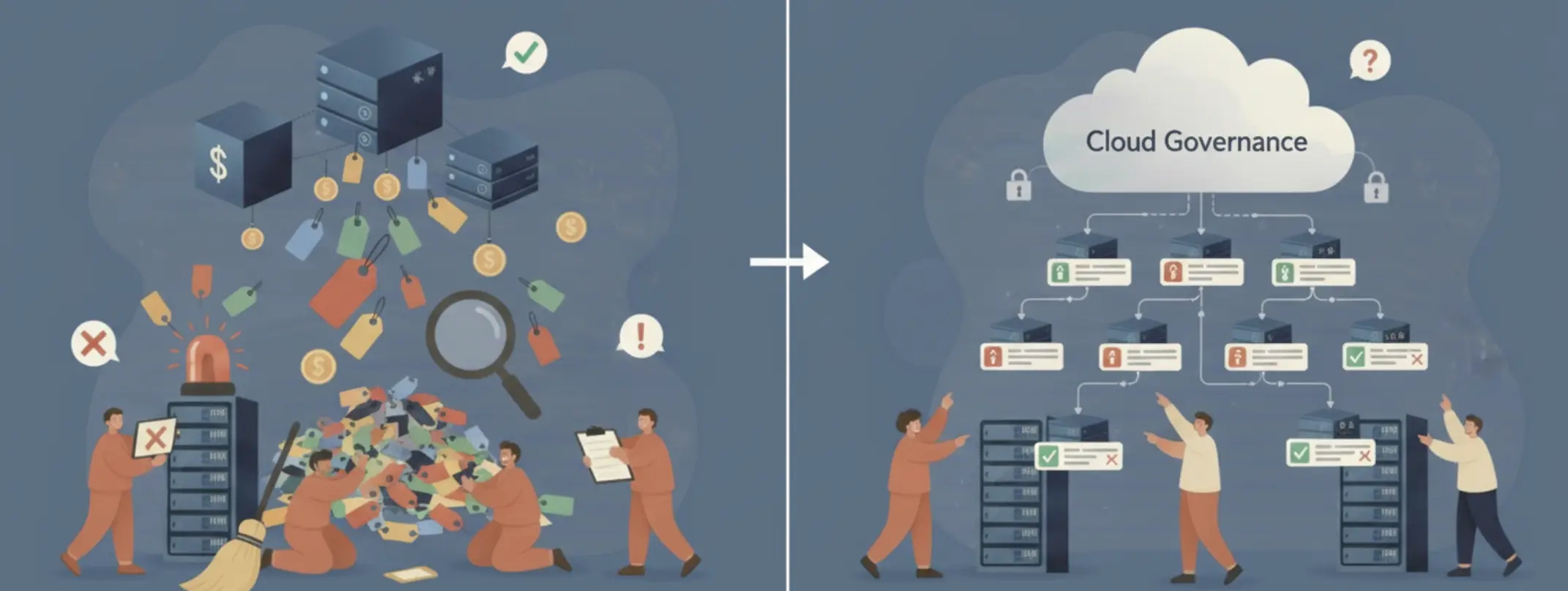
Reactive tagging is structurally broken. Learn why discovery-time tag governance eliminates unallocated spend before it ever appears in your billing reports.
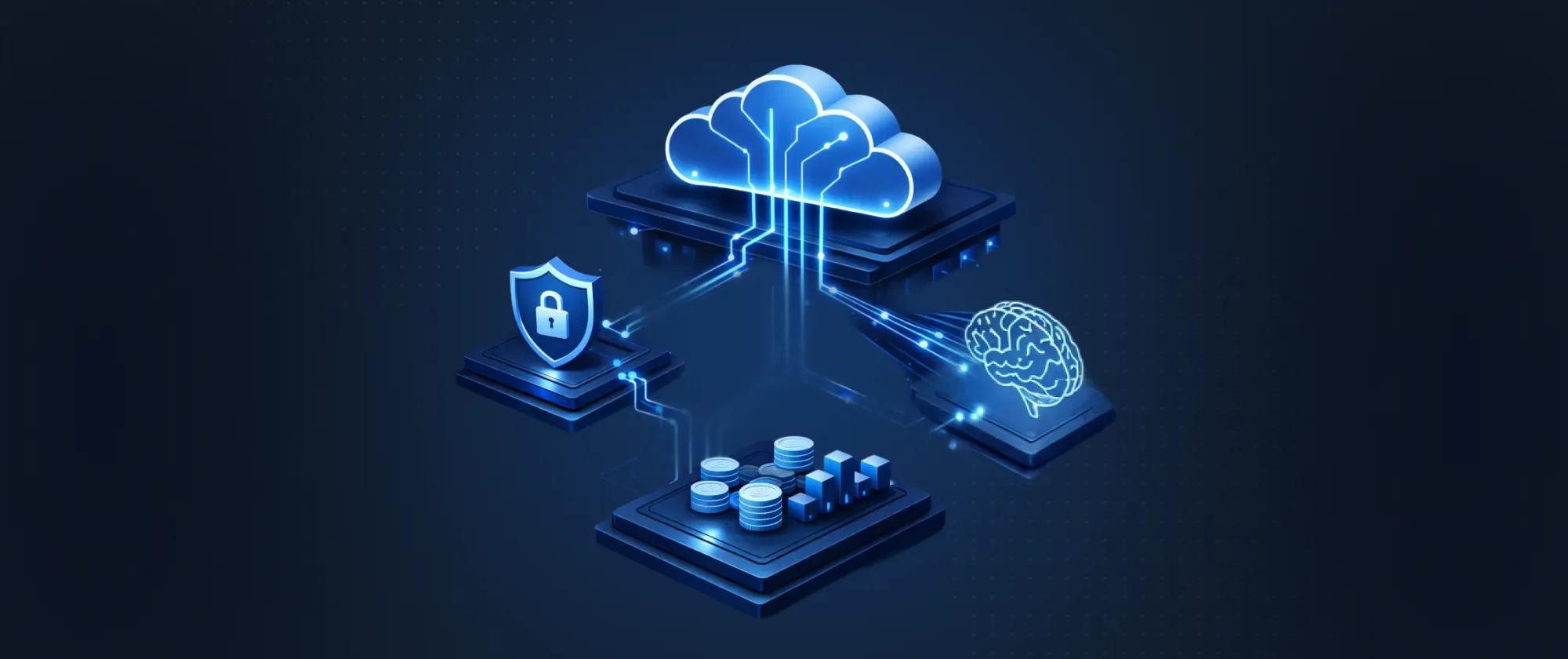
Cloud networking is more than digital plumbing, it's a policy engine for trust and cost control. Learn how VPCs, subnets, and routing impact security and FinOps.
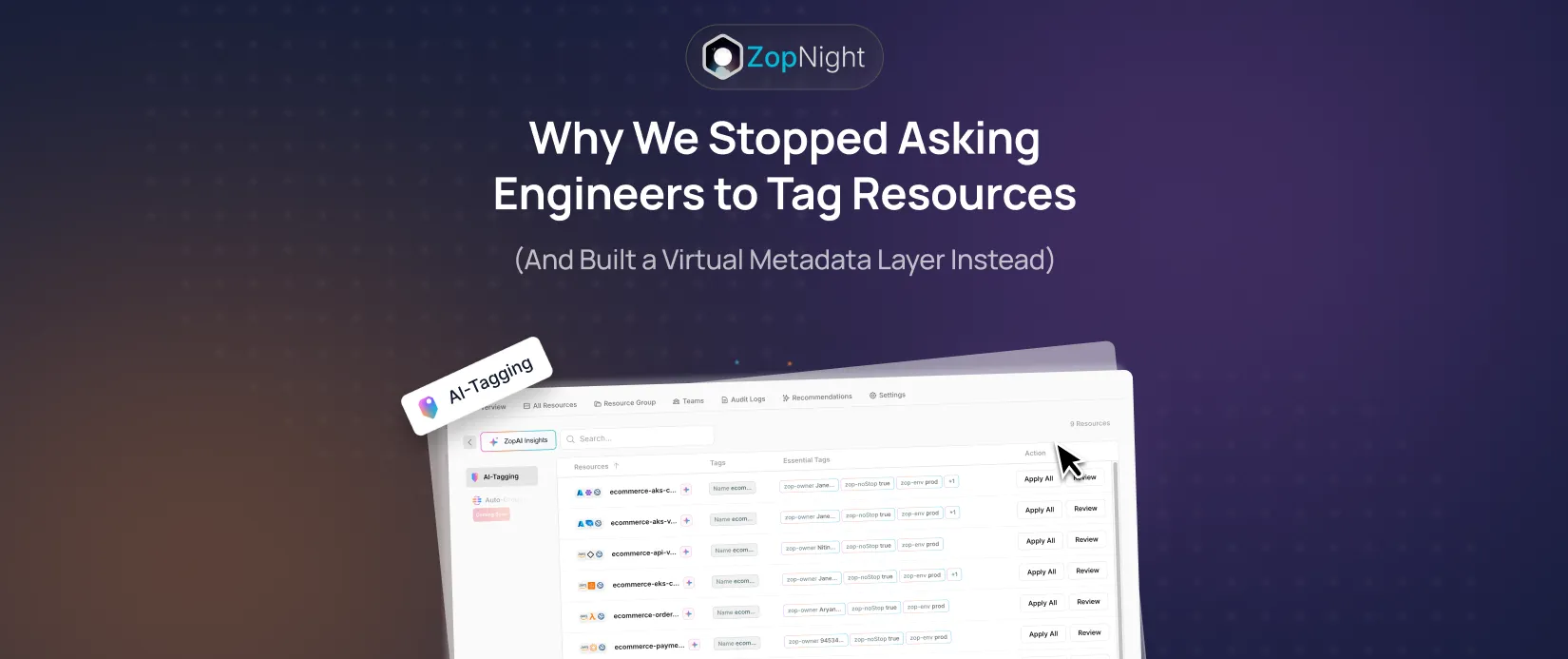
Learn how ZopNight replaced manual cloud resource tagging with a virtual metadata layer using XGBoost, increasing tag coverage from 27% to 95% in 30 minutes.
Cron jobs were once the go-to for DevOps automation, but today’s complex cloud environments demand smarter, scalable alternatives. Learn why cron is no longer enough—and what modern teams are using instead.
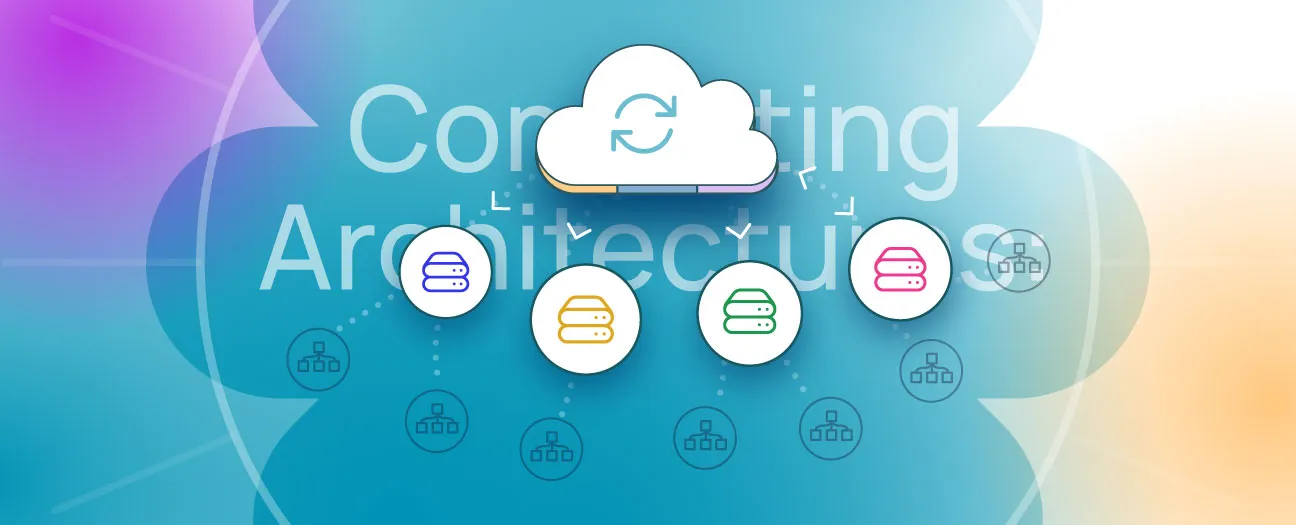
Delve into the technical architectures of edge computing. Explore its core components, use cases, challenges, and how it complements cloud computing to enable low latency and efficient data processing.
Discover how Finder achieved 50% reduction in cloud computing costs through predictive budget controls and optimization. Learn about their implementation strategy and results.
One post a week. Sundays. No "10 ways to think about cloud" listicles, just the engineering and FinOps notes we'd want to read.
See. Find. Fix. Automatic.
Connect your first cloud account in under 5 minutes. See your first remediation in under 7. No credit card required.