
The Visibility Problem in Cloud Spending
Cloud bills grow faster than the teams responsible for paying them, and the gap between what you spend and what you understand is where waste compounds silently.
zopdev writing tagged finops. Engineering and FinOps notes, post-mortems, and benchmarks.
Cloud bills grow faster than the teams responsible for paying them, and the gap between what you spend and what you understand is where waste compounds silently.

HashiCorp's August 2023 relicense of Terraform from MPL-2.0 to the Business Source License forced every infrastructure team to make a governance decision, not a technical one.

Cloud cost optimizations degrade predictably after implementation, and the degradation is structural, not accidental. Every manual FinOps cycle produces a point-in-time snapshot of savings. The…

Detecting cloud waste is the easy half. Every cost tool produces a list of idle instances, oversized volumes, and forgotten load balancers. The list is not the problem. The problem is that the fix…

Cost attribution has one dependency that quietly breaks it: every resource must be tagged correctly, by the engineer who created it, at the moment they created it, forever. That does not happen.…

AI is the fastest-growing line on the cloud bill and the least governed. Cost tools were built for VMs, disks, and load balancers. They see an Azure OpenAI deployment, an AI Search index, or an Azure…

Databricks is one of the largest and most opaque line items on a data team's cloud bill. It is also one of the few that genuinely spans clouds: the same platform runs on AWS, Azure, and GCP, often…

Most FinOps teams track one number when they need two, and that single blind spot turns cost governance into a cleanup exercise instead of a control system.

A budget only works when it lands on something a person can own. Most cloud budgets do not. They sit on a single resource or a resource group, objects that no team fully owns and no engineer checks…

A flagged idle Databricks cluster keeps billing until something stops it. ZopNight now governs AWS Databricks end to end: discover, cost, recommend, and stop.

Cloud cost optimizations expire. Not because engineers lose discipline, but because the infrastructure beneath every savings decision keeps moving. New services launch, teams grow, deployment…

Every FinOps initiative follows the same arc: a burst of recoverable savings in the first weeks, then a structural decay that accelerates past month 3 (ZopDev, "Why FinOps Savings Decay Faster After…

AWS Bedrock cost is not token spend. It is an estate of agents, models, provisioned throughput, and jobs, each billed differently and easy to miss.

Commitment-based cloud savings decay by 18% within four months of purchase, and that decay is not a surprise outcome. It is the predictable result of treating a purchasing decision as a finished task…

Vertex AI cost sprawls across endpoints, notebooks, feature stores, and jobs. The worst offenders have no off switch. FinOps starts with finding them all.

A schedule recommendation you have to rebuild by hand mostly never gets applied. One-click apply turns identified savings into realized savings.

At $500k ARR, a company's cloud bill has grown large enough to make commitment-based discounting worth the operational cost of managing it, but not yet large enough to absorb the penalty of making…

Databricks cost is not one number. It is five compute surfaces billed on Azure VMs plus DBUs, and tools that meter only the VMs miss the waste.

Stop/start fixes idle resources, the easy half of cloud waste. Right-sizing and config changes mutate live resources and need their own rule class.

Cost allocation depends on tags, but a flat key=value dropdown is unreadable at scale. Grouping values by key turns the tag picker into a real FinOps control.

A savings figure in a card tells you a total, not a direction. Savings decay. Plotting daily savings next to spend turns a slow leak into a dated event.

A finished SageMaker job that still shows a monthly charge corrupts your forecast. ML needs run-duration costing for jobs and idle rightsizing for endpoints.

P95 CPU became the default right-sizing signal because it reduces a complex system to a single number that executives can approve in a slide deck. We measured this pattern across 40 production…

Every cost tool ranks cleanup by dollar impact. A 200 USD idle instance sits at the top of the list. An unattached disk that bills 0 today sits at the bottom, below everything, where no one scrolls.…

Most Azure cost-anomaly detection runs at one level: the subscription. That feels natural, because the subscription is where budgets and ownership usually sit. It is also where the detection misses…

Every cloud account has a list of idle resources nobody has touched in weeks. The recommendations exist. The savings are real. The list never gets shorter. The blocker is not data. The blocker is…

Your cloud bill shows a Kubernetes cluster as a single number. EKS, GKE, and AKS all roll node compute into one rolled-up figure. Finance sees the total. Nobody sees which namespace or deployment…

AI assistants now connect to cloud cost infrastructure in 5 minutes, transforming how engineering teams query spending data. Claude Fable wires to cloud cost data via ZopNight in 5 minutes (ZopDev…

Cloud infrastructure pricing forces a binary choice: lock in capacity at a fixed discount or chase maximum savings with no guarantees. Commitment discounts deliver predictable costs by reserving…

Ticket-based infrastructure workflows inject a minimum three-day delay into every deployment cycle because each request moves through a queue where a centralized team must interpret, validate, and…

Building an Internal Developer Platform for 12 teams costs $400,000 (Platform Engineering for 12 Teams: The $400k IDP Bill), and understanding where that money goes determines whether you build or…

Every FinOps playbook tells you to right-size your EC2 instances. Most of them tell you to use P95 CPU utilization as the signal. That advice will cost you more in rollbacks than it saves in compute.

AWS Savings Plans vs Reserved Instances: The Break-Even Model Before Every Commitment AWS offers two ways to commit compute spend in exchange for a discount: Savings Plans and Reserved Instances.…

A team ships a generative-AI summarisation feature. The first month it costs $400 in Bedrock invocations. The second month it costs $1,200 as adoption grows. The third month it costs $9,200 because…

A FinOps lead opens AWS Cost Explorer to answer the question the CFO asked yesterday: where is our cloud spend going. The first view is a stacked bar chart of monthly cost by service. EC2 is the…

The cron expression means "stop at 7 PM, weekdays only." Most engineers can read it after a moment. A non-engineer cannot, and even the engineer who wrote it forgets the semantics within a quarter.…

Every cost-optimisation product has shipped an "Apply Fix" button at some point. Most teams do not click them. Either the button is a stub that opens a ticket somewhere (and nothing happens until a…

A cloud bill increased 22% from March to April. Without context the number looks alarming. With context — traffic grew 35% in the same window, MAU grew 28%, completed transactions grew 41% — the…

The 2 a.m. compute runaway is the canonical FinOps incident. A Spark job is misconfigured to provision new EMR nodes every minute it cannot find a leader. A test agent left running on a developer's…

Finance computes cost per customer as once per quarter. The number is mathematically correct and operationally useless. A B2B SaaS at $8/customer/month sounds healthy until you look at the…

The tag taxonomy starts at 30 keys and climbs from there. Year one, every team agrees on , , , . Year two, finance asks for , , , . Year three, the security team adds , the platform team adds , and…

The closed-loop pipeline runs the easy part well. Detect fires, decide picks a remediation, act executes, verify confirms. The hard part is the line between "auto-execute" and "page a human." Most…

A platform team picks Cloud Custodian in week one. By week six they realize Custodian fires after the resource is created, the wrong shape for blocking misconfigured Terraform plans. They add OPA. By…

A team writes the cron job that shuts non-prod down at 8 PM. The cron runs three commands in parallel: scale the EKS Deployments to zero, pause the Aurora cluster, stop the ElastiCache Redis nodes.…

A platform team starts a security review for a cost-optimization vendor. The vendor's onboarding doc asks for a CloudFormation template that creates a role with "to ensure all features work." The…

Three years of cost retrospectives across mixed AWS fleets keep landing on the same finding. Teams that pick one compute commitment model and apply it across the whole fleet (all-Savings-Plan,…

The 47th agent is when finance shows up. Below 30 agents in production, the Anthropic invoice is one tolerable line item somewhere south of $25,000 a month, and nobody asks who is spending what. Past…

The average mid-size production EC2 fleet runs at 12 to 23 percent utilization. The remaining 77 to 88 percent is idle compute that ran continuously, billed continuously, and produced nothing. On a…

A single Claude API call is predictable. An agent with tool access is not.

A runaway Lambda burns $200 an hour at 100 concurrent invocations. By the time your cost anomaly alert fires, three days have passed and $14,400 of unnecessary spend is already in the bill.

Every mid-size engineering organization has 5 to 15 AWS accounts that nobody actively owns. The "POC" account from 2024. The "team-old-name" account that survived the 2025 reorg. The…

A FinOps team produces a recommendation report on Monday morning. It identifies $185,000 of monthly waste across 240 cloud resources. By Friday, 12 of those 240 are remediated. By the end of week 4,…

Multi-region is the architecture default for serious SaaS in 2026. The justification is real: disaster recovery, latency, sovereignty. The cost is hidden in the bill under "data transfer" and…

A B2B SaaS product team ships its first AI feature in 2024. By 2026, the same team has 12 AI features in production: summarization, classification, extraction, search, an AI assistant, three flavors…

A LARGE Snowflake warehouse left running 24/7 costs $11,520 per month on AWS Standard Edition, per the Snowflake pricing documentation. Multiply that by the four warehouses a typical data team runs…

The average time to remediate an IAM misconfiguration in ticket-driven teams is 14 days. The fix takes 4 minutes. The DERA loop — Detect, Evaluate, Remediate, Audit — closes the gap automatically. Here's the full AWS architecture.

Istio sidecars cost 0.5 vCPU per pod at idle. At 100 pods, you're paying for 50 idle vCPUs. eBPF moves observability into the kernel — one hook point per node, not per pod. Here's the architecture, the tools, and when you still need Envoy.

Every service provisioned from a Backstage template starts with zero budget alerts, zero mandatory tags, and a dev environment that runs 24/7. The platform team didn't choose this — they just never added cost defaults to the template. Here's how to fix that.

Most teams treat cloud waste as a reporting problem. It isn't. ZopNight v2.0 ships the full four-layer control stack: discovery, policy, audit, and action — across AWS, GCP, and Azure.

Backstage has a $0 license fee and requires 2-3 senior engineers full-time. This piece works through the build vs buy decision with real TCO numbers and a decision framework.

OPA Gatekeeper rejects a pod before it ever runs. Here is how to write admission policies that block oversized resource requests, missing cost labels, and non-prod images at deploy time, not billing time.

Every DR design decision has a precise dollar figure. Active-active vs active-passive, cross-region replication cadence, failover automation. Here is the full cost breakdown.

GitHub Actions runner minutes, ECR image layers, artifact archives, and ephemeral test clusters rarely get the same scrutiny as production workloads. That is where the leak starts.

Unrestricted pod egress runs every outbound call through NAT Gateway at $0.045 per GB. NetworkPolicy is both a security control and a cost control. Here is how to use it as both.

Most teams apply VM cost intuition to Lambda and end up paying more, not less. This covers the real billing math, the memory-speed paradox, the cold start trap, and the framework for deciding when Lambda wins.

Resource-level FinOps has a ceiling. Cost per customer is the metric that tells you whether your infrastructure is getting more or less efficient as you grow. Here is how to instrument it.

Most teams pick their multi-account governance model the wrong way. Here's a technical breakdown of AWS Control Tower vs custom landing zones — guardrails, Account Factory, SCP structure, and when each model actually scales.

The average remediation event takes 47 minutes in runbook-driven ops. The fix takes 4. Closed-loop remediation eliminates the overhead — here's the full technical architecture and how to start with your first policy.

Most cloud platforms tell you what happened. They do not fix it. This release moves ZopNight from a visibility layer into an execution layer — VM autoscaling across 3 clouds, 43 read-only AI tools, tag-level cost attribution, and more.

NAT Gateway silently compounds costs through $0.045/GB processing fees and cross-AZ charges. We reduced our bill from $4,200 to $2,016/month with two targeted fixes — per-AZ gateways and free VPC endpoints.

70-80% of S3 objects are never accessed after upload yet sit in Standard at $0.023/GB. Here's the cost math, when Intelligent-Tiering breaks even, and how to automate lifecycle policies with guardrails.

Tagging and dashboards don't change spending behavior. Learn how chargeback and showback models create real team-level cloud cost accountability — with allocation mechanics, phased rollout, and failure modes to avoid.
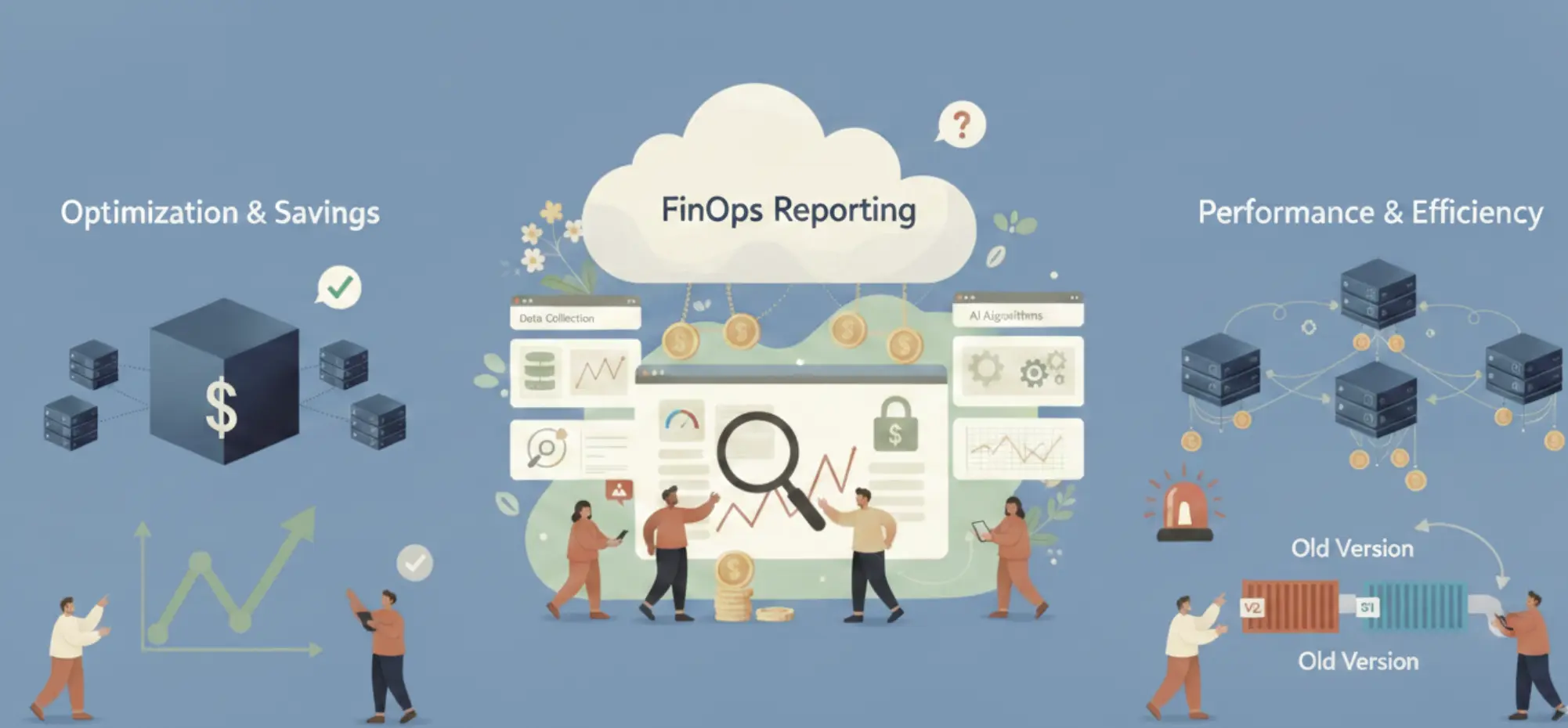
Most cloud cost dashboards show what you spent but not whether you are on track. Learn the five metrics every FinOps budget health page needs: estimated spend, verified savings, savings rate, cost trend, and budget health.
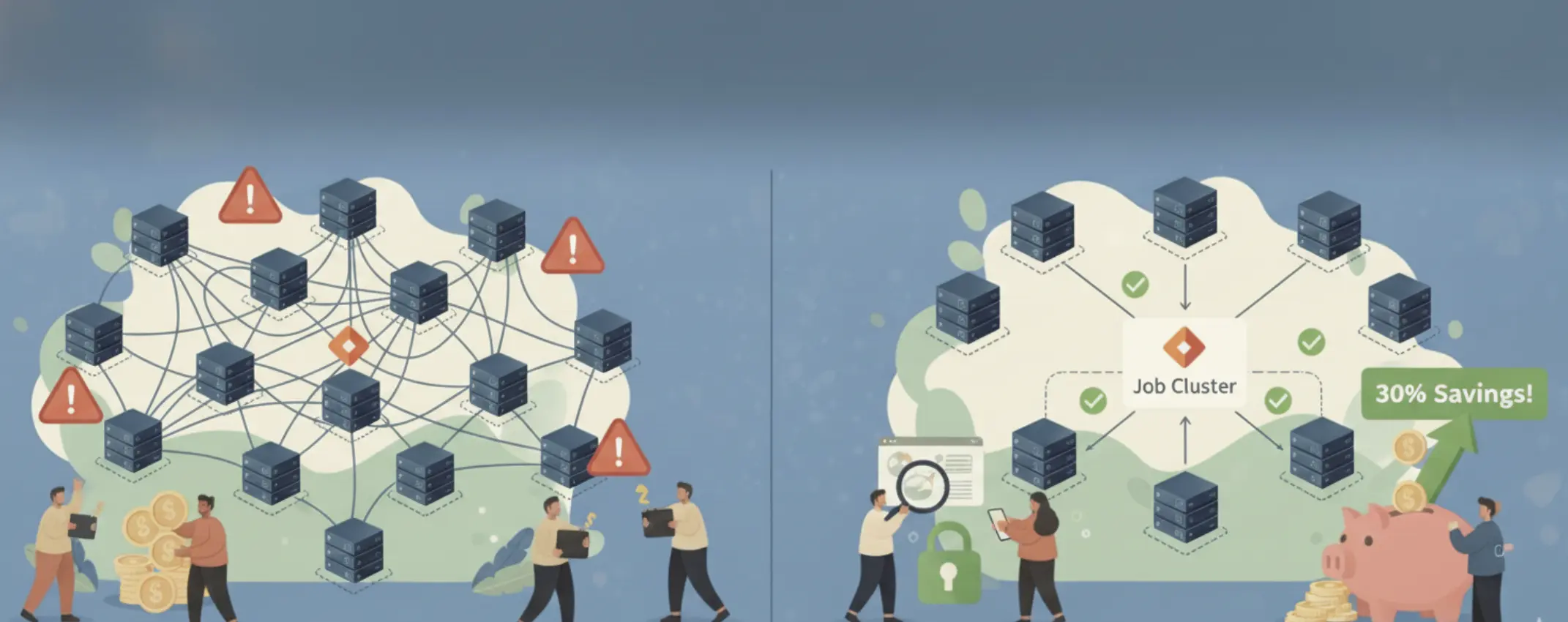
All-Purpose Compute costs 2.7x more than Jobs Compute for the same hardware. Learn how to audit your Databricks workspace, migrate scheduled pipelines to job clusters, and eliminate idle spend.
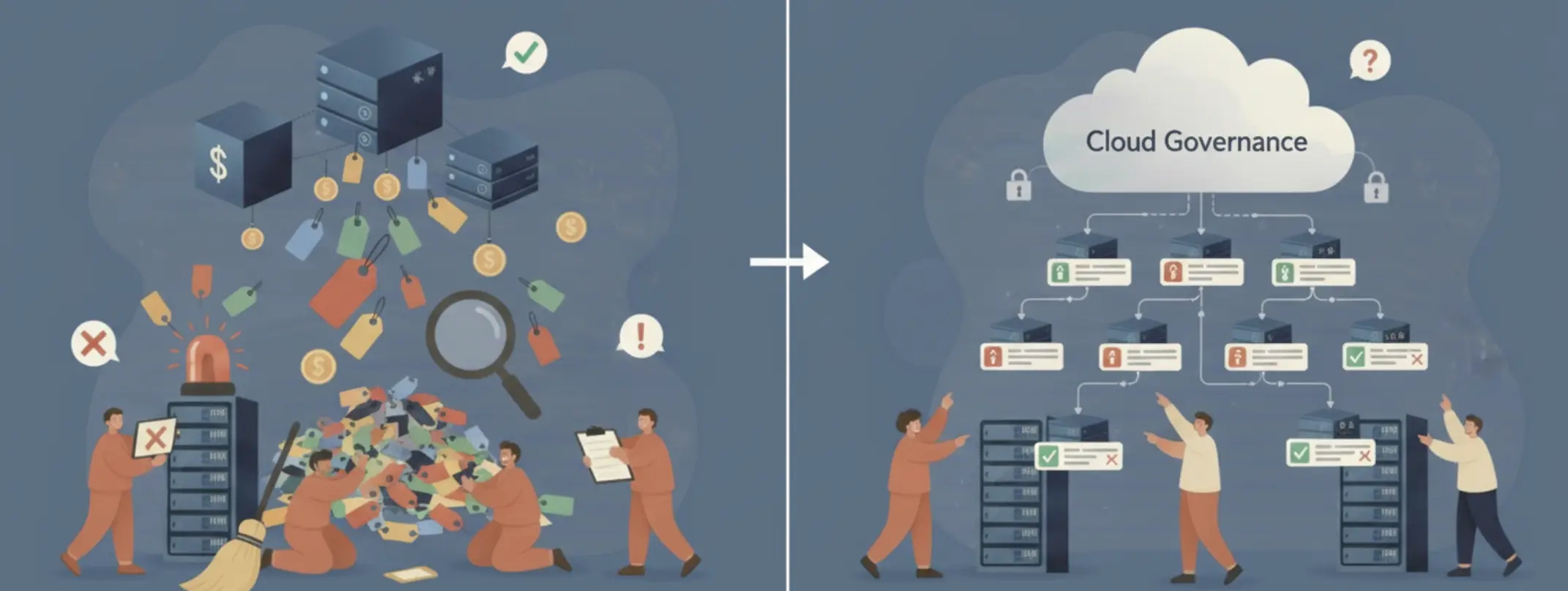
Reactive tagging is structurally broken. Learn why discovery-time tag governance eliminates unallocated spend before it ever appears in your billing reports.
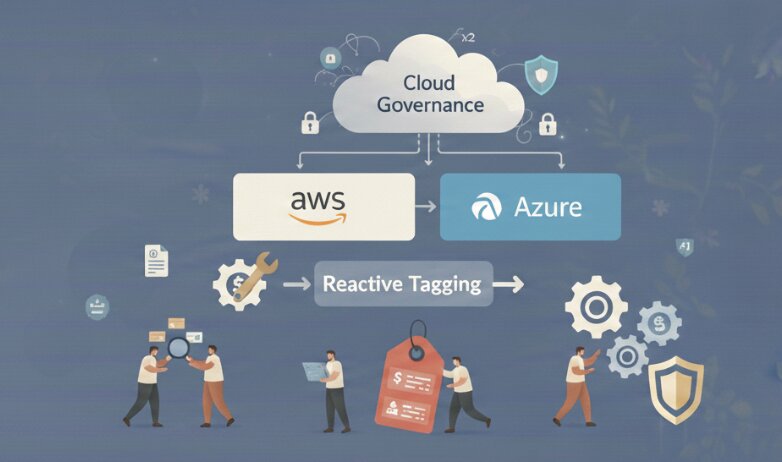
Manual tagging strategies have a consistent failure mode: they work at the start and break down within six months. Here's how to build enforcement at the point of creation and automated remediation on AWS and Azure.
ZopNight v2.0 ships seven new features, seven revamped core systems, measurable performance gains, and the foundation for two major capabilities arriving next. Every changelog item comes from production.
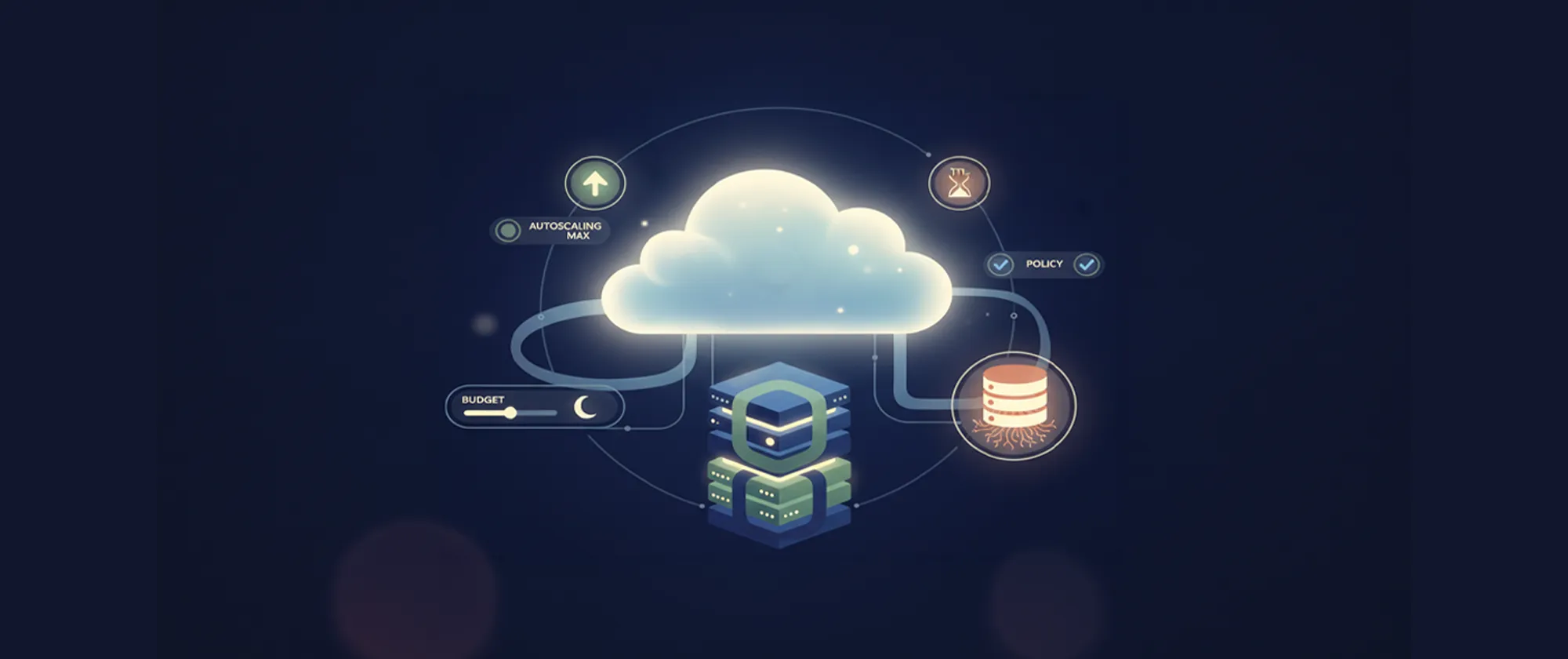
Discover why FinOps is shifting from passive reporting to active runtime enforcement. Learn how to control cloud costs in real-time with policy-as-code and automation.

Manage multi-cloud infrastructure with ZopNight’s All Resources page. Control runtime states, automate schedules, and enforce budgets in one unified surface.
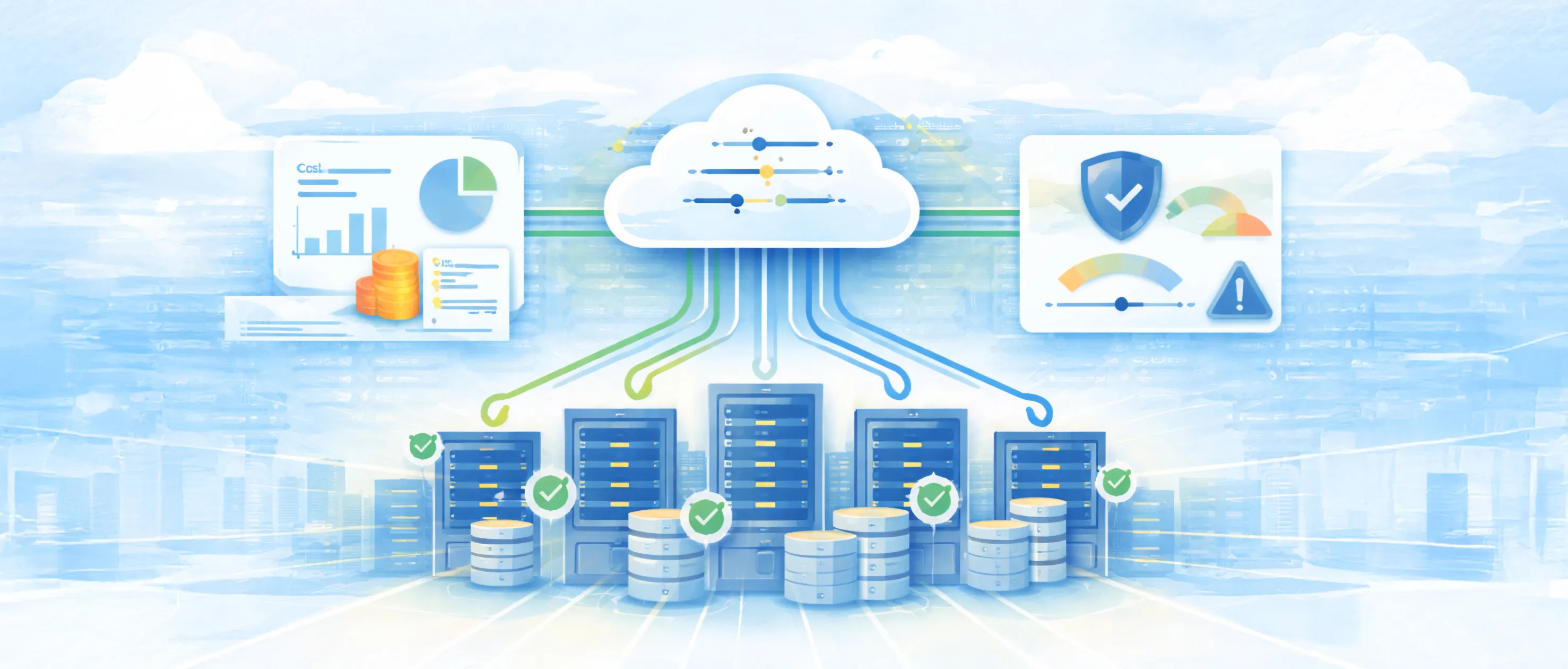
Discover why load balancing is a real-time decision engine for performance, risk, and cost. Learn how traffic orchestration drives reliability and cloud efficiency.
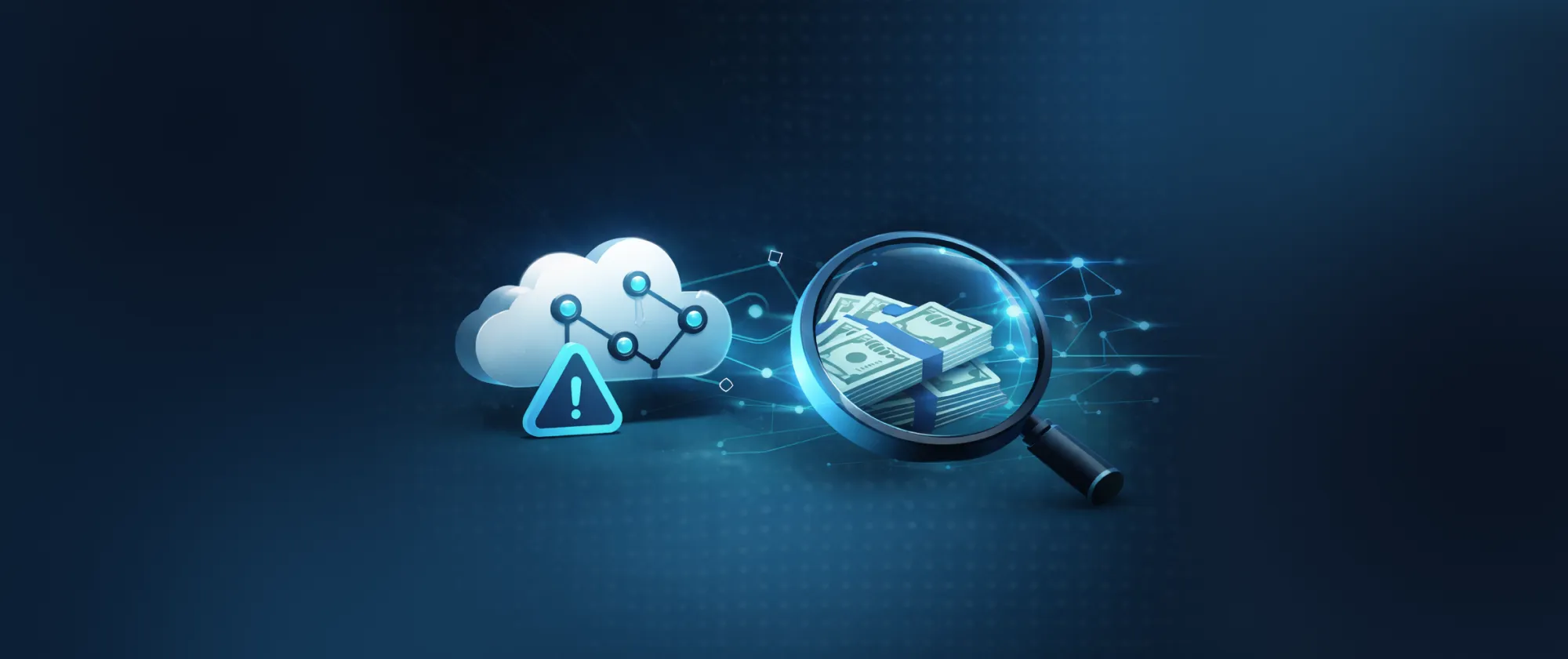
Discover why cloud networking is a multi-dimensional challenge and how invisible network issues lead to compensatory spending and bloated cloud budgets.
Cloud networking is more than digital plumbing, it's a policy engine for trust and cost control. Learn how VPCs, subnets, and routing impact security and FinOps.
Discover the hidden financial impact of launching cloud instances. Learn how FinOps and DevOps integration prevents over-provisioning and reduces cloud waste.
Discover why event-driven architecture is the operating system of the cloud. Learn how EDA enables reactive scaling, self-healing, and real-time cost control.
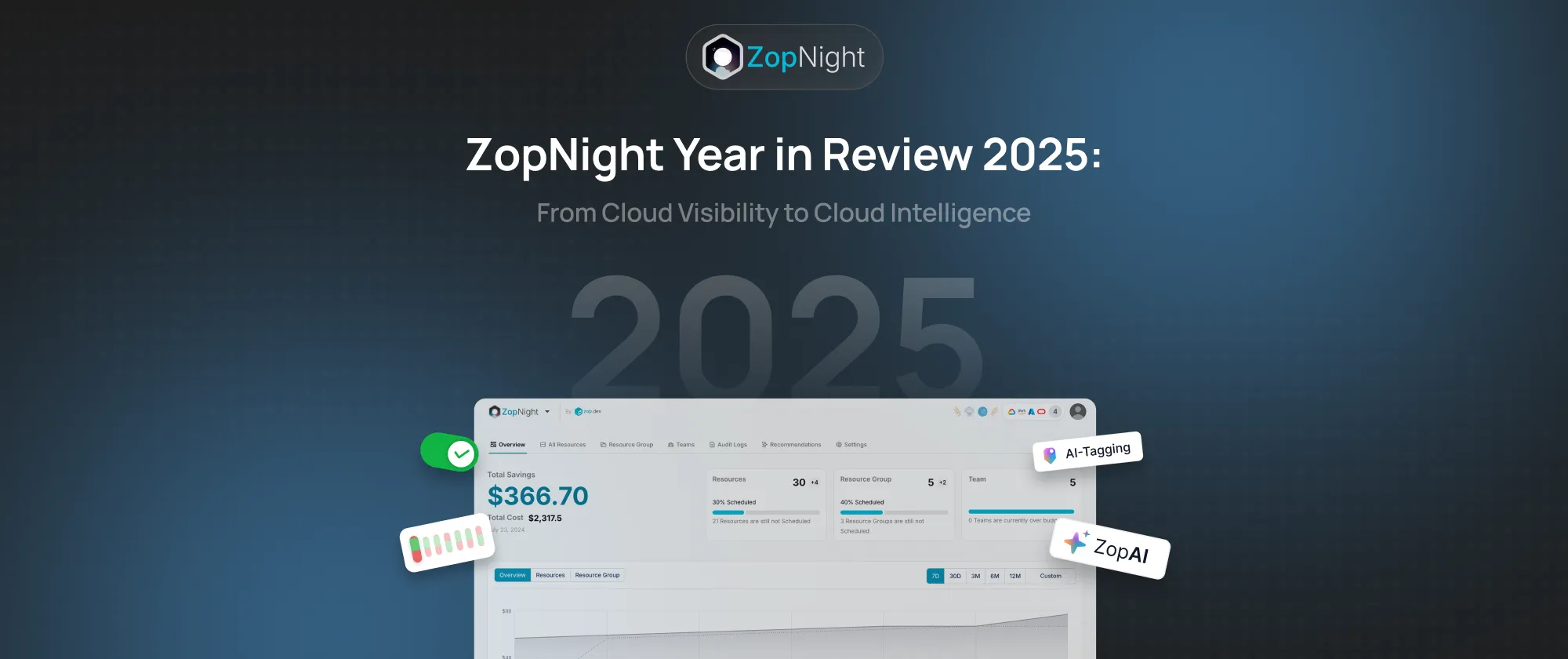
Discover how ZopNight evolved in 2025 from cloud visibility to a full-scale FinOps and cloud operations platform powered by ZopAI for enterprise efficiency.
Cloud bills spiking at month-end? Discover the 7 most common causes — from forgotten staging environments to zombie infra — and learn proven fixes to stop budget blowouts before they happen.
Discover how ZopNight’s microservice architecture, powered by the GoFr framework, makes cloud cost optimization fast, secure, and scalable—cutting waste with zero-maintenance scheduling.
Learn how engineering teams—from startups to enterprises—can build a disciplined, cost-conscious cloud culture using simple rituals, automation, and tools like ZopNight. Cut cloud waste without friction.
Manual infrastructure cleanup drains time and cloud budget. Learn how automation saves money, boosts developer focus, and scales with your cloud footprint.
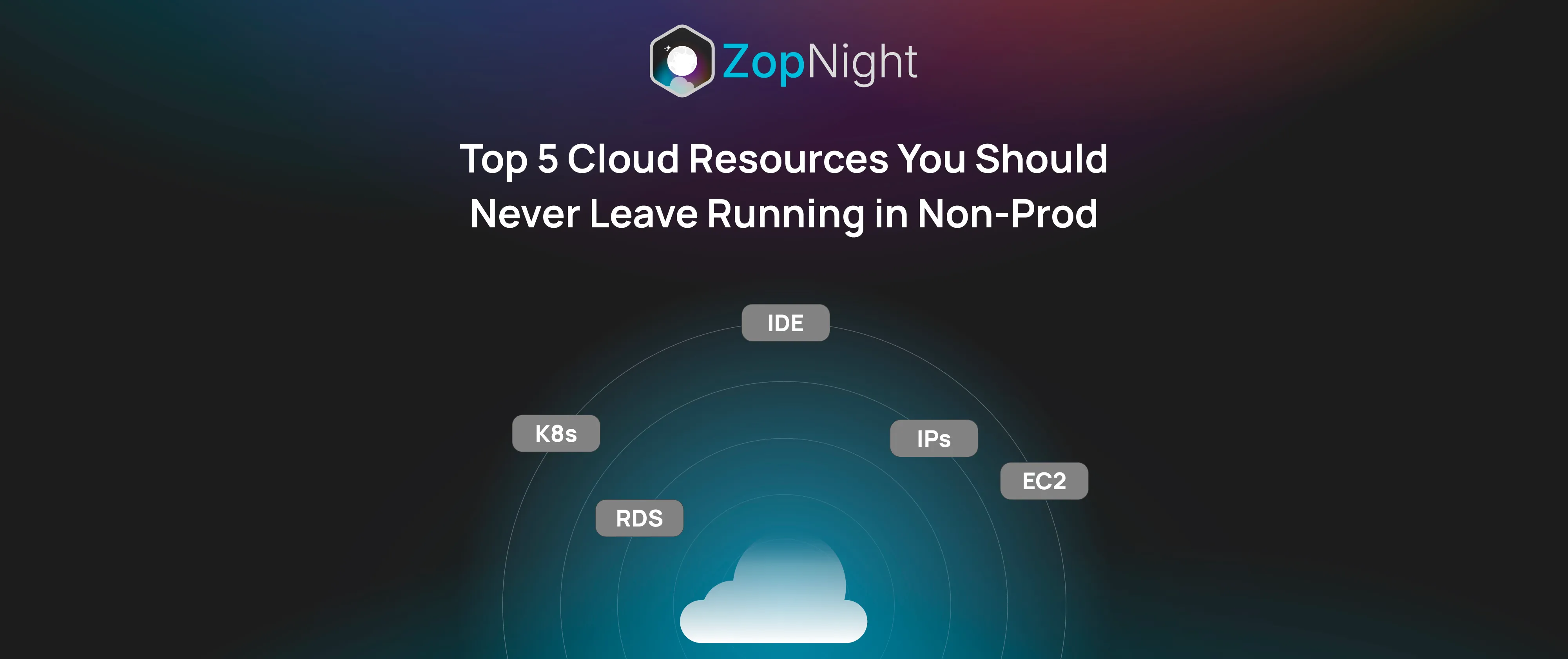
Non-prod environments are quietly draining your cloud budget. Learn which 5 resources to shut down, how to automate infra cleanup, and why teams trust ZopNight to reduce waste without touching production.
Many teams assume cron jobs or native schedulers are enough to cut cloud costs — but simple scheduling mistakes can silently burn thousands. Learn the 7 most common infra scheduling pitfalls and how ZopNight helps you avoid them.
Tired of seeing your cloud budget vanish overnight? Learn how to spot hidden cloud waste, put idle resources to sleep, and build cost-saving habits that won’t slow your team down.
Discover how Finder achieved 50% reduction in cloud computing costs through predictive budget controls and optimization. Learn about their implementation strategy and results.
One post a week. Sundays. No "10 ways to think about cloud" listicles, just the engineering and FinOps notes we'd want to read.
See. Find. Fix. Automatic.
Connect your first cloud account in under 5 minutes. See your first remediation in under 7. No credit card required.